
Body Doubling
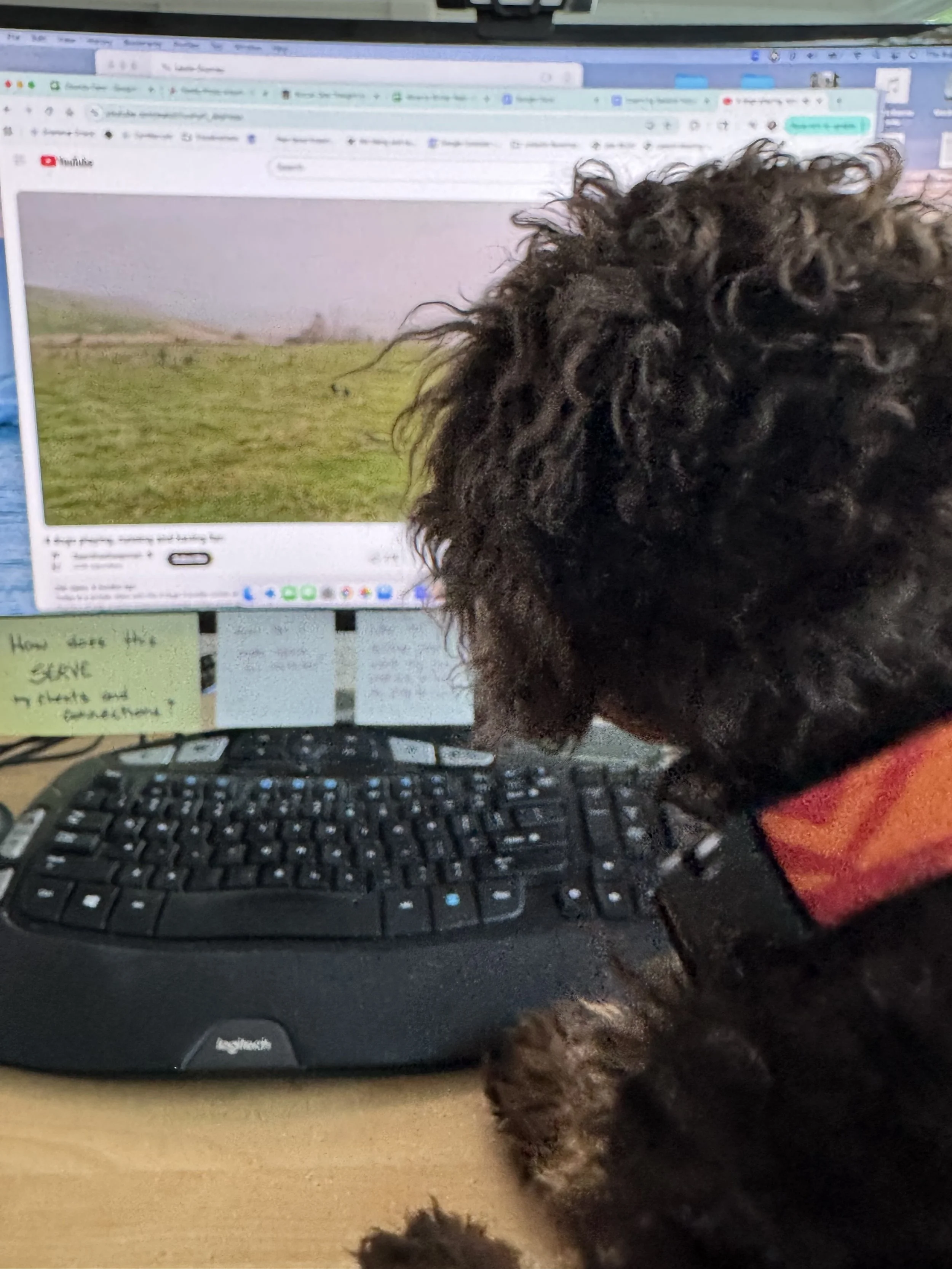
Selkie likes Tech, West Seattle, WA 2025
12:58, oh no, I’m going to be late for my call. I’m outside with Selkie telling her to Go! Go! Go! Finally, she squats and it’s time to go inside. Rushing to my desk, I log in to the call. Ah, made it, only two minutes late. No big deal.
Once on my Zoom call, I watch as others join. Ethan, our moderator asks us to type our goals into the chat. I type, ‘For the next hour, I’m going to work on my newsletter.’ I watch others type their goals.
Ethan waits, then says,
‘OK, see everyone in 55 minutes’.
We turn off cameras, mute speakers and get to work for the next 55 minutes. At the end of the hour, Ethan calls us back for check-ins.
Writing
Most of my peers who have left the corporate world no longer take Zoom calls, but this one is important to me: the Getting Stuff Done call. It’s a Zoom call where writers log in, declare what we’d like to get done for the next hour, then get to work. This is called co-working (or body-doubling).
Knowing I only have 55 minutes to get my work done, I am incredibly productive. No checking my phone, no visiting the refrigerator, and no watching ‘just one more episode’ on Netflix. I am focused. Everyone else is working as well.
Bicycles, Copenhagen, 2024
A couple of years ago, I would have rolled my eyes at this practice, but in the last year, I’ve found it to be magical! Psychologically, there are reasons for this:
1. You’re publicly declaring your plans, so now there’s mild peer pressure to complete your task.
2. Your brain’s mirror neurons cause you to unconsciously mimic what others are doing. Seeing others work motivates you to get your own work done. This is one of the reasons the Tour de France riders ride in groups. Working solo is doable, but working as a group encourages you to push further when you think you’re bored, tired, or want to quit. (There’s also the benefit of drafting, but that’s another story.)
3. Making an appointment to get work done means you are committingto doing the work. A vague ‘I’ll get this done next week’ allows for excuses and the busy-ness of daily life gets in the way. A clear appointment ensures you will be there.
Co-working was originally developed as a strategy for those with ADHD, and it works well for neurotypical brains as well. As a writer, I find this practice incredibly productive. Many already established groups that meet online and/or in person are readily available (Shut up and Write).
If you’re working on a project that’s big and challenging, I invite you to try it and see if this works for you!
Cynthia
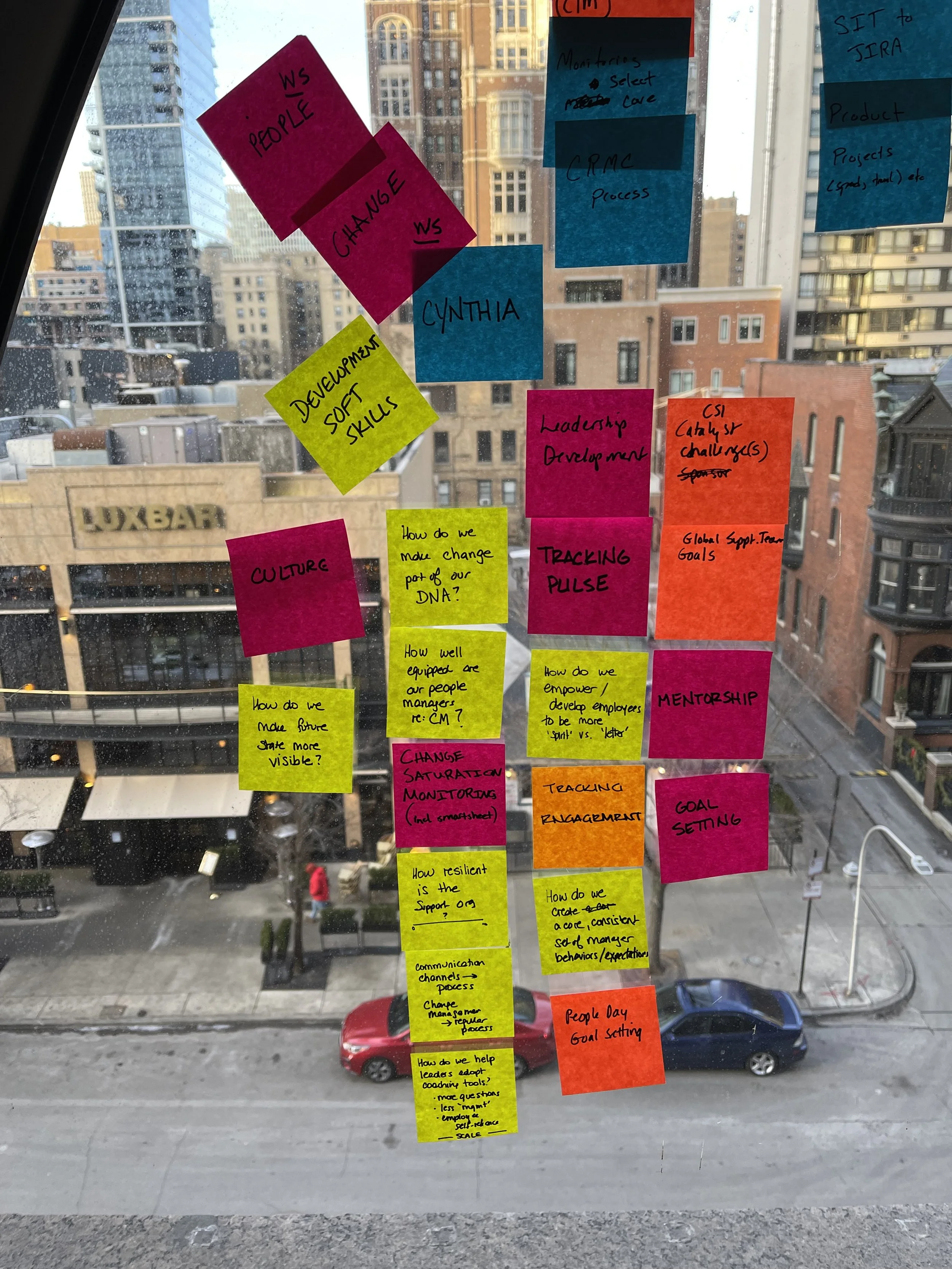
Many tasks ahead!